
Three types
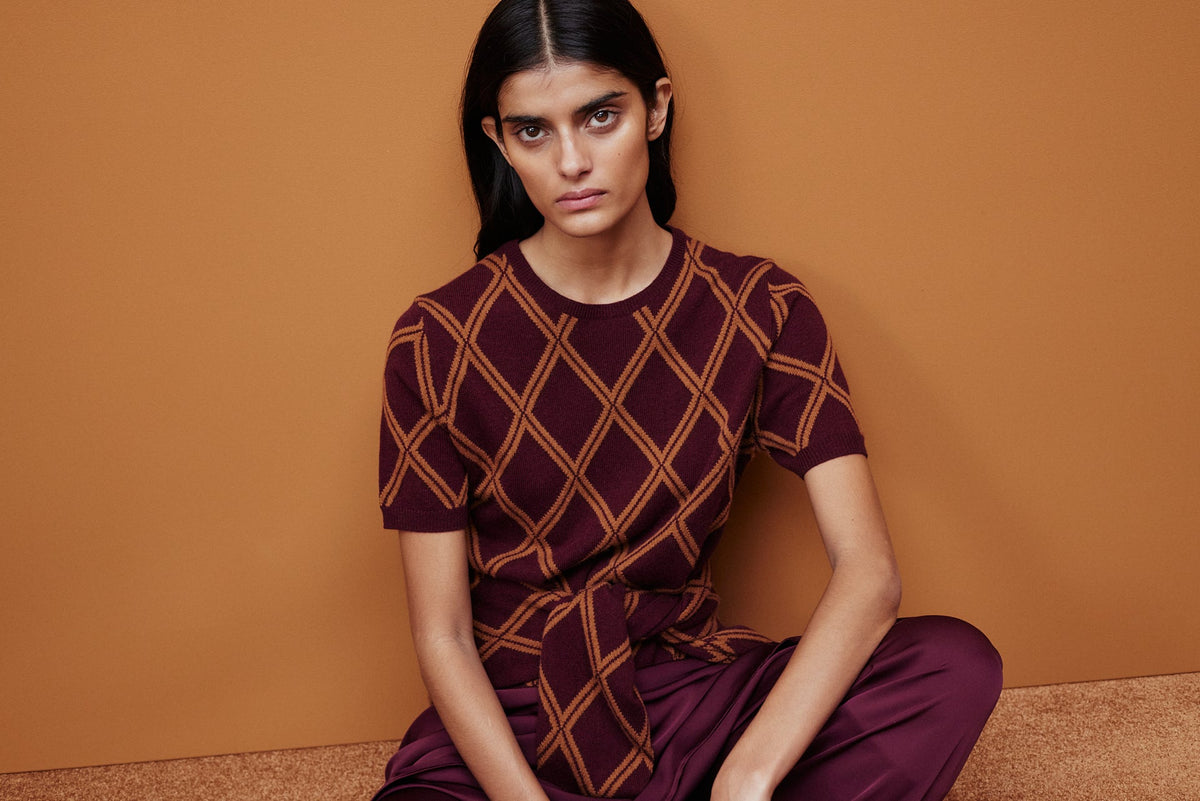
A cardigan worn open hangs straight down from the shoulder. It looks effortless, and is how most people wear it. But add a tie belt at the waist, and the same piece behaves completely differently—the fabric gathers, the shoulder softens, and a knit that was a top becomes a shape.
 |

|
That is why a tie belt is a design decision, not an embellishment. In cashmere, the effect depends entirely on the weight of the knit. Too light, and the belt pulls the fabric into thin creases. Too heavy, and it bunches up. The knit must have enough body to gather neatly and enough softness to drape again below the waist. This balance is what defines a belted cashmere cardigan.
The Shaped Layer builds the chapter around this idea. The tie-waist cardigan gives the knit its line. The cable-knit vest works in reverse—sleeveless and buttoned, it maintains structure through texture rather than tension, and the patch pockets give it real utility as a layer between shirt and coat. The ribbed set does it a third way: rib-knit holds volume without weight, which is why an oversized sweater and matching trousers look thoughtful rather than shapeless.
Three ways to give cashmere a shape. None of them make it stiff.
 |

|